The Morning Commute Ritual: 5 Essential Oils That Make Traffic Almost Bearable
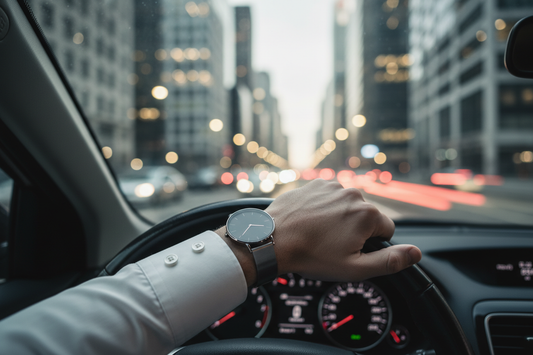
Nobody wakes up excited about rush hour. The alarm goes off, the coffee brews, and somewhere between the front door and the highway on-ramp, the day's stress begins its slow accumulation. By the time you've merged into the third lane and watched your estimated arrival time tick upward, the calm of your morning routine feels like a distant memory.
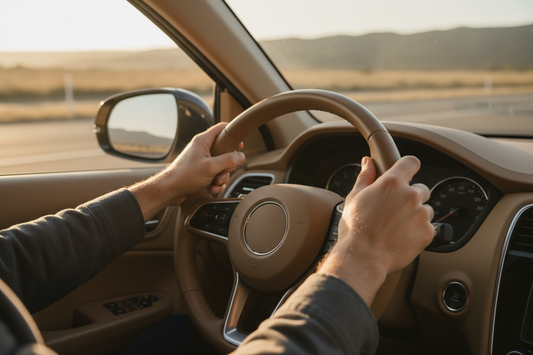
But here's what most drivers haven't considered: your car is a small, enclosed, highly personal space — and that makes it uniquely responsive to scent. Unlike a living room or an office, where fragrance disperses quickly into a larger volume of air, a car concentrates aroma in a way that creates an almost immediate sensory effect. Used intentionally, that's a significant advantage.

Why Scent Works Faster Than Music or Podcasts
When you put on a playlist or queue up a podcast, the effect on your mood is real but indirect — it works through attention, association, and cognitive engagement. Scent operates differently. Olfactory signals travel directly to the limbic system, the brain's emotional processing center, bypassing the analytical prefrontal cortex entirely. The result is a mood shift that happens before you've consciously registered the fragrance.
For commuters, this means that the right essential oil in your car diffuser isn't just a pleasant addition to the drive — it's an active tool for emotional regulation.
The Five Scents Worth Keeping in Your Glove Box
Lavender is the obvious starting point, and for good reason. Backed by more peer-reviewed research than almost any other essential oil, lavender has been shown to reduce cortisol levels, lower heart rate, and decrease self-reported anxiety. On a congested freeway, those aren't trivial benefits. Two to three drops in your diffuser before you start the engine is enough to set a noticeably calmer tone for the entire drive.
Freesia is the underdog of the morning commute. Its crisp, lightly fruity freshness has an almost immediate alerting effect — not the jittery stimulation of caffeine, but a clean, clear-headed wakefulness that feels like the olfactory equivalent of opening a window. If you're someone who struggles to fully wake up before arriving at the office, Freesia is worth trying.
Bellflower brings a delicate, airy quality that's difficult to describe but easy to appreciate. Think of a morning breeze moving through a field of wildflowers — light, undemanding, quietly uplifting. It's the scent for days when you need to arrive somewhere feeling open rather than armored.
Rose might seem like an unusual commute choice, but its velvety, classic profile has a grounding quality that works particularly well on high-pressure mornings. When you know the day ahead is going to be demanding, Rose creates a subtle sense of composure — the olfactory equivalent of straightening your collar before walking into a room.
Osmanthus is for the longer drives. Its warm, honeyed sweetness with apricot undertones is complex enough to hold your attention without demanding it, making it ideal for highway stretches where you want something that evolves gradually rather than hitting all at once.

Building Your Commute Ritual
The most effective approach isn't to use the same oil every day, but to match your scent choice to your morning's emotional weather. Anxious day ahead? Lavender. Need to show up sharp and energized? Freesia. Big presentation, important meeting, high-stakes conversation? Rose.
Keep a small collection in your car — three to five oils is plenty — and spend ten seconds before each drive making a conscious choice. That brief moment of intention is itself part of the ritual. You're not just selecting a fragrance; you're deciding how you want to feel for the next thirty minutes.
Over time, the association between the scent and the emotional state it supports becomes self-reinforcing. Your nervous system learns the pattern. The effect deepens.
A Final Note on Concentration
Less is genuinely more with car diffusers. The enclosed space amplifies everything, and an overpowering fragrance creates its own kind of stress. Start with two drops, assess after five minutes, and add a third only if the scent feels too subtle. The goal is presence without dominance — a fragrance that supports the drive rather than competing with it.
Your commute isn't going to get shorter. But it can get considerably better.
Previous
How to Remove New Car Smell Safely Without Artificial Sprays
Next
Best Car Air Freshener for Pet Owners